
How we made a new homepage for our choir
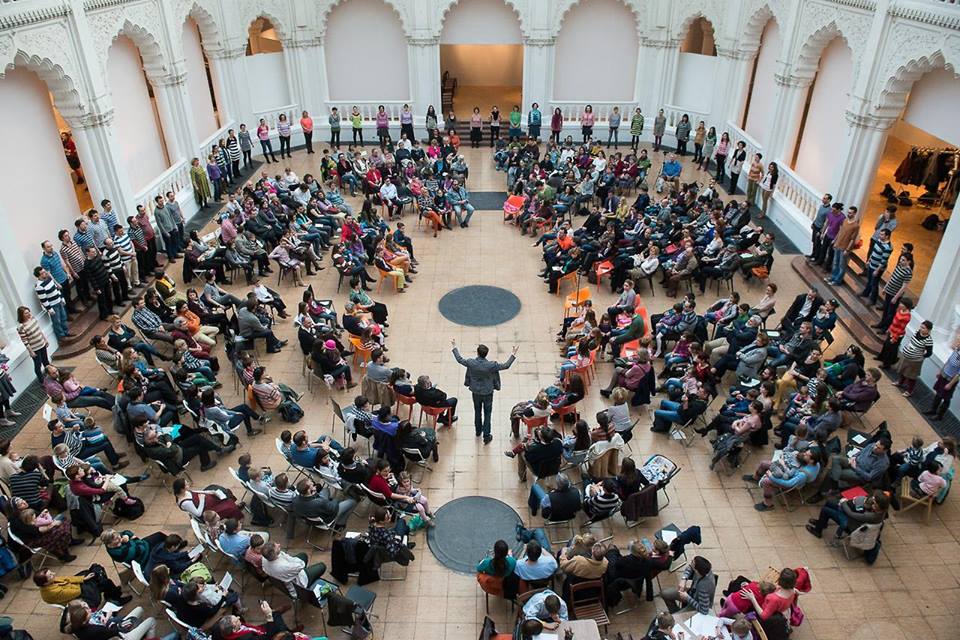
A presentation about what we achieved with the renewal of the Csíkszerda choir website
Why I studied cybersecurity
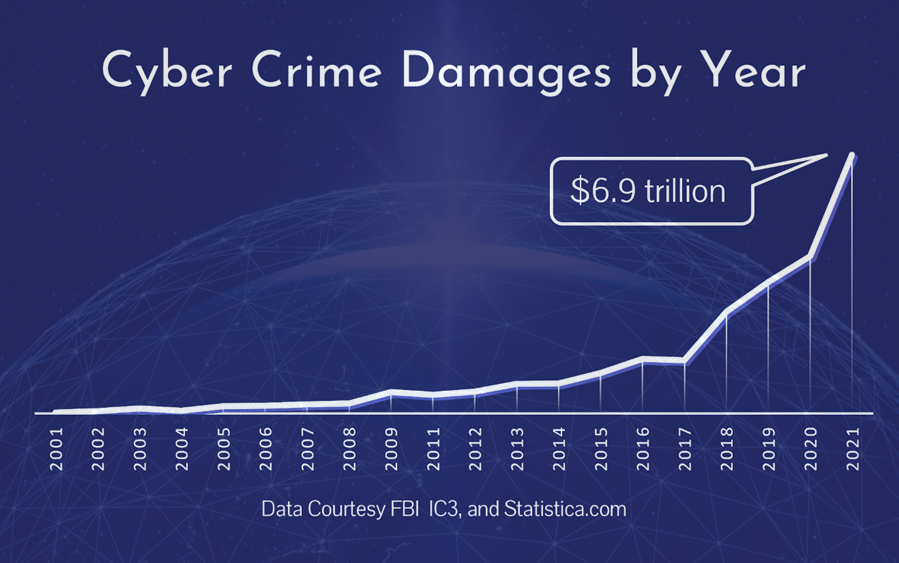
Last summer, I didn’t go anywhere on vacation much. At the same time, the work pace also slowed down during the summer, and I used this time off to learn cybersecurity. I was especially enthusiastic – I completed the six-month course offered by Coursera in two months. But what motivated me to do it? That’s what this article is about. Disturbing experiences in my environment I’ve been seeing more and more of my friends’ accounts being hacked. Not just one – all of them. Then, once they were locked out of their accounts, their connections and accounts were used to further their families. It’s happened to my family, my circle of friends, and I’ve been seeing more and more people being exposed to cybercrime every day. I also felt vulnerable. One day at Mensa, a gentleman who specializes in cybersecurity gave a presentation, and what he said numerically supported what I had found empirically: cybercrime is spreading at a rapid pace. It’s getting more sophisticated, and people are becoming more and more vulnerable to it. I wanted to protect myself, my family, and my friends. That was the primary motivation. Quite simply, these numbers led me to conclude that some level of cybersecurity awareness is a basic life skill. Labor market importance Of course, this trend poses a threat not only to my loved ones and the general public, but also to companies. Presumably, the demand for cybersecurity-savvy workers will increase, so it’s worth learning about this for that reason alone, I thought. Both small businesses and large corporations are deeply vulnerable to cybercrime. Let’s study cybersecurity I chose Google Cybersecurity, which not only gives a certificate, but from what I read, is a very comprehensive course. It also includes Python and bash, and their applications in cybersecurity. This was especially useful because I had already learned them before. In addition, my experience was that this course was more interesting than these online courses usually are.
Zero to hero in time management

The methods that worked for me when I was improving my time management. How I becaome zero to hero in it.
Tips for successful independent language learning

or how I learned English and how I’m learning Italian now In Hungary, most people learn English from the second grade of primary school, yet it is extremely difficult to acquire significant language skills in public education. This was the case for me, even though I went to a very reputable high school. Since neither I nor my family had the financial means to pay for additional language schools, I had to take my fate and language skills into my own hands. I tested my methods for myself, and what worked, I continued to use. Not long after, I passed my intermediate English language exam, successfully. Years have passed since then, I have been working in an international work environment for years, and I am sure that even a higher level language exam would not cause any particular problems. In this article, I will write about the methods I used a decade ago, and I will supplement them with methods I use now, as I prepare for the intermediate level exam in Italian. I hope my tips will help you learn languages successfully on your own. 1, The most important thing is consistency I decided that I would study English for 1 hour every day. I would set a timer on my phone and study English until it ended. This was easy on some days, especially at the beginning and especially when I was enthusiastic, but I also sat down to study English for 1 hour when: I worked overtime that day I had been hiking all day that day and was physically exhausted. I was sick It was some holiday, like Christmas or New Year’s Day. I was suffering from some mental problem etc. How did English learning work in such cases? Hardly. There were days when I would stare at a book for an hour and have no idea what it was about. Still, I consider it an effective method in retrospect, because with this level of consistency, I didn’t allow myself to stop studying long-term. 2, Duolingo is very good, but it’s not enough on its own Duolingo is a great help for learning English 10 years ago and Italian now, in several ways: It helps you learn the language consistently by providing just the right amount of push notifications: from time to time it tells you it’s time to learn, but the amount is not too much and not annoying. It can motivate you in many different ways, and to be honest, it’s quite addictive and fun. Different types of tasks develop different things: vocabulary, grammar, pronunciation, or even listening comprehension. I find that the vocabulary built by Duolingo does not completely cover any topic; there will always be basic words in every topic that it has missed. The other thing is that I’m not happy with the way Duolingo explains grammar rules. Italian grammar is much harder than English, and if we hadn’t learned conjugations in high school with great difficulty, I would have had a hard time progressing in Duolingo without looking up the rules. I suspect the explanation behind this is that grammar rules, irregular verbs, and the like are very difficult to present in the entertaining way Duolingo wants them to be. However, it is important to note that Duolingo must have a great professional team behind it, and this opinion applies to the state of affairs in 2024. Duolingo Max has also just been released, which uses ChatGPT 4.0 to boost language learning. I haven’t tried it yet, but if I do, I will definitely write about it. 3, Have a magic notebook I used a single large spiral notebook with many pages to learn the language. Everything was in it, like an album. It not only served as a dictionary, but also contained a variety of other content. I always carried it with me, and if necessary, I could take it out on the train or in the doctor’s waiting room. The following things were in the magic notebook: There were plain dictionary pages. One side had the words in English, the other side in Hungarian. But on these pages I collected different expressions and idioms. Picture dictionary pages: for me and my visual memory, the picture pages were much more useful. For example, I drew a car in the middle of the page and wrote neatly around it, indicating with arrows „bonnet”, „tank cap”, „trim wheel”, etc. This can be done with many things: body parts, organs, parts of plants and animals, bicycle parts, landscapes, etc. Of course, these drawings were in color, but so was the rest of the magic notebook. I usually used colored felt-tip pens, but I didn’t mind using a highlighter or colored pencils either. Using color helps you remember what’s in the notebook. Feel free to use multiple bookmarks, insert extra pages, and use any method you can think of. Separate pages can be dedicated to each grammar rule, with examples. 4, Extended Duolingo Duolingo is very good at giving topics, but I already criticized the vocabulary associated with it above. So I usually do the following: for each topic that Duolingo suggests (in my case, as I write these lines, it’s „Wedding”), I think about what other words might belong to this topic and create a little vocabulary for it. 5, Have good time management skills On the rougher days, I had to decide in advance when I would have time to study for 1 hour. Often this was late at night, but it was a great help that, for example, Duolingo, or listening to audio materials (more on that later), could be done on public transport, even on the go. In such cases, my little timer would count down, and sometimes my entire one-hour study time would pass on the go. It just occurred to me that next time I’ll try listening to my favorite audio while running on the treadmill at the gym. 6, The best audio materials No, these
A success story of a Facebook group

Csillagászat-kedvelők (Astronomy Enthusiasts) is a Facebook group that I created in the summer of 2012 to share astronomy-related articles, news, and other things with my friends who are interested in astronomy. There were plenty of them: at the time I was studying astronomy at ELTE, and I was known to many people in amateur astronomy circles. Back then, I never imagined that 12 years later there would be 30,000 people in the group. After the group was created, we grew in number, and people I didn’t know wanted to join, and they weren’t necessarily people involved in astronomy, in fact: they were mostly completely average Facebook users who found the group for some reason. It’s not a big deal, all Facebook groups work like this. But instead of a group of friends who were more or less familiar with astronomy, I immediately found myself in a social media bubble: toxic commenters, swearing, pseudoscience, posts with unqualified spelling one after another, etc. It was possible to hire administrators and moderators back then, who helped with moderation, but that was just one thing. I think the most important thing was to lay down the basic principles of the group. We had to experience how much it was worth getting into a debate with someone, and how tolerant we should be towards unscientific things – because it’s okay to write posts like „I saw a UFO” with fire and iron and zero tolerance, but what about when it’s just an educational article full of sloppy wording? The rules of the group slowly developed, and in the meantime there were changes between administrators and moderators from time to time. (Communication between equal leaders, for example, would definitely be worth a separate post.) We had to determine what values we wanted to represent in the group. Scientific credibility: The primary principle is credibility. I think the standard is extremely high. There is a national news portal from which we almost never allow articles because we do not consider the articles published there to be credible. (Despite this, we always start reading it, but it turns out pretty quickly that it is tabloid, clickbait, and does not reach the standard that we would like to see in the group. Creating a cohesive community: This principle covers quite a lot. It’s not just about group members writing to each other respectfully and constructively. It is especially important to help beginners, because it often happens that an enthusiastic interested person writes something stupid or sends a very basic post. It is important that in such cases they are not embarrassed. We give advice and answer their questions, even if they are very basic, this is natural. It also includes the fact that we do not laugh at pseudoscientific things at all. There are many groups where people interested in science make esoteric teachings and their practitioners a target of ridicule. For me, and for the group, this is not correct behavior. I see that if someone falls victim to their own naivety and esoteric teachings, it is misery enough for them, there is no need to be the object of hatred. Enforcing these principles has at one time brought about quite a few conflicts, which I had to learn to deal with. However, there has been no precedent for these for years, which is partly due to the power of the community (experience shows that if an existing community behaves in a certain way, new members most often adapt to it), and partly to the fact that I am no longer affected by the curses of others, especially since I see the results of consistency and standing up for principles. Thanks to these principles, things have emerged in the group that were not intentionally created, but are the result of the right community: Due to the scientific credibility and the relaxed environment, many professional astronomers and very knowledgeable amateur astronomers are active members of the group. It regularly happens that a curious, lay person’s questions are answered by a professional astronomer, so they receive the most professional answer possible. A high-quality discourse develops under the articles and news published in the group, which is not at all typical of the pub talk in the comment section that is typical of the rest of Facebook. Experienced amateur astronomers submit world-class observations. These experienced amateur astronomers also help beginners. Several telescope shops and other astronomy-related businesses are also represented in the group, they are active from time to time and give advice on buying telescopes. I am especially glad that it is not typical for any of the store employees to start bidding on each other to buy their products. The group also hosts a number of astronomical events – I’m not talking about a single phenomenon here, but telescope demonstrations related to the phenomenon, but there are also camps, personal and online lectures, etc. that reach more people. In recent years, the group has basically been characterized by consistent daily maintenance. Dealing with the group is part of my morning routine, I usually deal with it while sipping my coffee: Sharing some astronomy articles and news Checking out new applicants and posts waiting for approval Reading the comments and making sure everything is in order. Moderating Changing the cover photo There are seven of us in the admin/moderator team, and it also takes the consistent work of the others to make it all work. Occasionally, Facebook introduces features that can be useful to us: for example, the “Expert of the Group” designation. We were able to mark if someone is a professional astronomer or has enough astronomical knowledge to be sure that they are writing something scientifically credible – but I don’t think anyone does this. In any case, whenever a new feature is released, we definitely try to test how it can be useful to us. Who knows when a feature will come along that will bring a big breakthrough. Of course, there are possibilities, I am also
How to lead a team of volunteers – and how not to
Recently, a home project spanning several months has reached its finish line, which I will write about in much, much more detail later, because there will certainly be something. However, now I do not want to write about what this project was, but about the experiences and knowledge I gained by having a team of volunteers help me with this work. Expectations The project I came up with was something bigger, but it was also a good thing. In addition, I had a community at my disposal that consisted of countless great people who were enthusiastic and willing to help with such a cause. I thought that if I wanted to spread my wings in terms of my leadership skills, this community would be a gold mine. And I was right, and I wasn’t. At the beginning of the work, I prepared a lot of things: I wanted to create something similar to a ticketing system on Google Spreadsheet. According to my plans, this table would have been shared with all my volunteers, which would make them know exactly what to do or how they could help. Everyone would keep the table up-to-date, and everything would run smoothly as far as possible. Well, I didn’t think it was possible to tackle childish ideas so professionally. Reality The reality is that I was surrounded by a lot of very enthusiastic and supportive people, but everything worked in a completely different way, according to your own choir dynamics. Of course, this is not a bad thing at all, in fact. The team consisted of the following types of people: System Administrators Three colleagues on my team also supported me with technical tasks such as domain management, hosting administration, and setting up SSL certificate. Graphic designer A team member helped me fine-tune the design with her excellent aesthetic sense and creativity. Ticket System guys Two choir members had already started searching for a suitable ticketing plugin, finding it, and customizing it to the choir’s needs. Ideation Users Many members of the community have provided ideas – and fortunately, the vast majority of them are feasible and actually a good idea. Tester Army Many choir members participated very enthusiastically in the testing, and within a few hours they found all the errors, typos, etc. The following are the things I learned as a novice leader Fontos ismerni mások tudását és képességeit In a company, development is inherently done by people who are experts in their field, so you can communicate effectively with them using technical terms. There were a lot of people in the choir who wanted to help me, and their level of expertise varied greatly. Sometimes it was very difficult to figure out how to express myself, what their tasks would be. Unfortunately, there were some who were very enthusiastic, but their knowledge was not enough to help in any way. However, there were also plenty of others who were able to help once I found the right way to communicate. Don’t get me wrong, there are a lot of highly skilled people in this community. They are amazing artists, experts in other subjects, but their knowledge is lacking when it comes to web development. I’m sure similar situations can arise in a professional environment, so it was good to experience this. Even though I’m the boss, I have to adapt Lorem ipsum dolor sit amet, consectetur adipiscing elit. Ut elit tellus, luctus nec ullamcorper mattis, pulvinar dapibus leo.
Power BI HRD
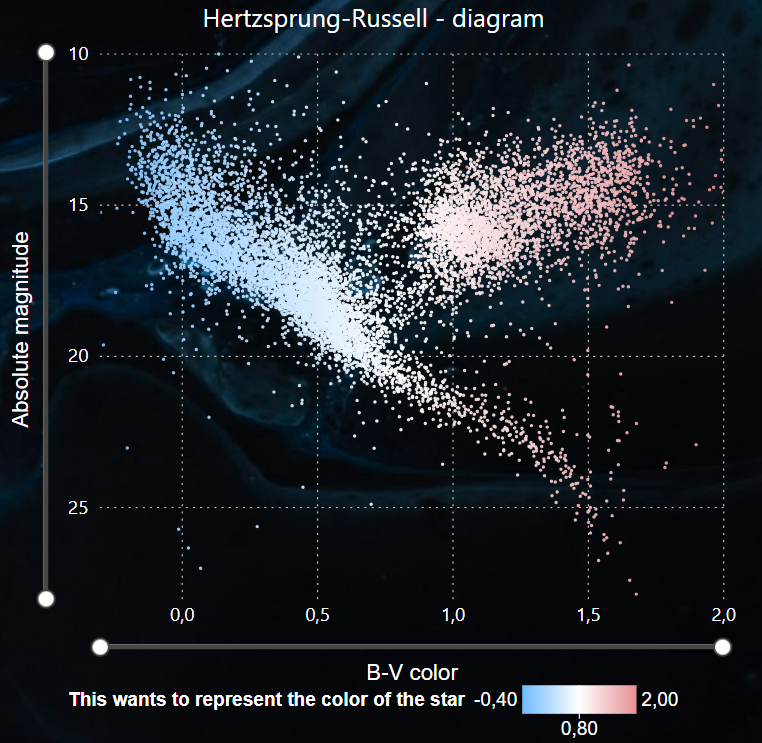
In order to achieve my long term career goals, I really need to learn how to use Power BI. Since self-study is my superpower, I added it, and to add some fun, I used astronomical data. I downloaded the Hipparchos catalog as a test, and based on the contents of the columns I realized that a Hertzsprung-Russel diagram (HRD) would be perfect for my first project. This chart, which is fundamental to astronomy, was also a great project because there were so many different things to try and learn about Power BI. However, to be honest, my initial goal was just a simple HRD, the other filters, slicers and other features were just additional ideas. I did not regret this project at all, in fact, I really enjoyed the work. My HRD HRD represents the absolute magnitude of a star as a function of its color, but before we can proceed further, I need to define both terms first. Absolute magnitude Color of a star (B-V) Anyone who has seen a starry sky has noticed that the stars appear to be of different brightness. This is the visual magnitude. However, how bright a star appears depends on many different factors: From the brightness of the star: as they are also physically different. From the distance of the star: by definition, since a star is further away, the fainter it appears. From light absorption. We had no data on light absorption, and compared to the other two factors, it affects the magnitude of the star very little. So we neglect this. If we want to know how bright the stars really are relative to each other, we have to calculate how bright they would be if they were the same distance apart. The magnitude, which would be the apparent magnitude (m) of the star at a distance of 10 parsecs, is called absolute magnitude (M). The relationship between the two quantities is in the Function 1, where d is the distance to the star in parsecs. Stars have different colors, just like light bulbs have different color temperatures. To express this, the color index (most often the B-V color index) is used in astronomy. The physical details of this are beyond the scope of this article, so let’s stick with the fact that the color indices are usually in the range between -0.5 and +2. Smaller numbers are the color index of stars with a bluer, therefore higher color temperature, while larger numbers refer to a redder color. Function 1: Relation between the apparent and absolute magnitudes. The Hipparcos catalog contained many columns. When interpreting this data, I realized that not only can I display an HRD based on the data, but later I will be able to make it more interactive and informative with slicers. Since at this point I couldn’t assess exactly what I could get out of this project, I imported most of the database columns into PowerBI. The Hipparchus catalog did contain the B-V color index, but not the absolute magnitude of the stars, only the apparent megnitude. The absolute magnitude had to be calculated, but the database also did not contain the distance of the stars. Parallax, however, does. In general, parallax is the change in the relative position of bodies at different distances, viewed from different directions. The stars appear to move minimally as the Earth revolves around the Sun, and the distance can easily be calculated from the angle of this displacement. Due to the small angular deviation, the trigonometric parts of the formula can be neglected. The relation is therefore the following: Function 2: relation between parallax and distance Once the distance has been calculated from the parallax, the absolute magnitude can also be calculated from the apparent magnitude. So we have the two physical entities required for HRD. Picture 1: HRD generated with Power BI After I tried everything related to editing HRD from a design point of view, I was already thinking about how I could make it more useful, interactive and informative. Spectral type slicer On the HRD, the different types of stars are located separately, in their specific places. Of course, stars can be grouped in several different ways, which may be interesting from our point of view. I looked through the columns of the Hipparchus catalog and to my great delight it contained the spectral type of the stars. The spectral type is essentially an identifier consisting of a few characters, the different characters of which have different meanings. The first character can typically be a letter (O, B, A, F, G, K, M, R, etc.), while the second character can be its subcategory from a data visualization point of view. So I dreamed up a two-level slicer to mark the spectral type. However, I ran into some difficulties here: The spectral type can really be very diverse. It wasn’t given for every star, there were also empty lines. There were cases where the data was enclosed in parentheses or where the second character was a “/” or “+” sign. There were cases where only the bottom character appeared, etc. So I excluded empty lines and spectral type data starting with special characters from the analysis. I suppose this is a regular complication for anyone who works with Power BI on a daily basis, but this is the first time I’ve encountered this problem. Picture 2: And here’s the slicer. In the picture, I filtered it to the G2 stars, the HRD changes dynamically accordingly. Stellar classes The stellar classification does not end with spectral types, in fact, the best part is just beginning. The Roman numeral following the first two characters of the spectral type indicates the classes of the stars, which is so interesting, and they appear so typically on the HRD that it would have been a mistake to make a three-level slicer for the spectral types. Only these Roman numerals deserved a separate button slicer. I could write about stellar evolution and star classification for an amazingly long time, but this again goes beyond the scope