...based on own experiences
Years ago, my boss at the time asked me to learn something about time management because I’m not very efficient. I did, and in my opinion, mytime management is pretty good nowadays. However, my experience was that although the materials dealing with this contain a lot of useful information, the situation is not that simple. On the one hand, not all methods and tips may work for everyone, and on the other hand, all materials examined the topic from a single perspective: how to work better. However, time management affects our entire lives. In this article, I will talk about the things that finally worked for me, and I hope that I can help others with this article.
1. Use a time management app
There are so many time management apps out there, and I’ve tried a bunch of them over the years. Finally, there was ONE app that I knew was the one. Okay, I know this sounds like a paid ad, but trust me, no one reads this blog, so it wouldn’t make sense.
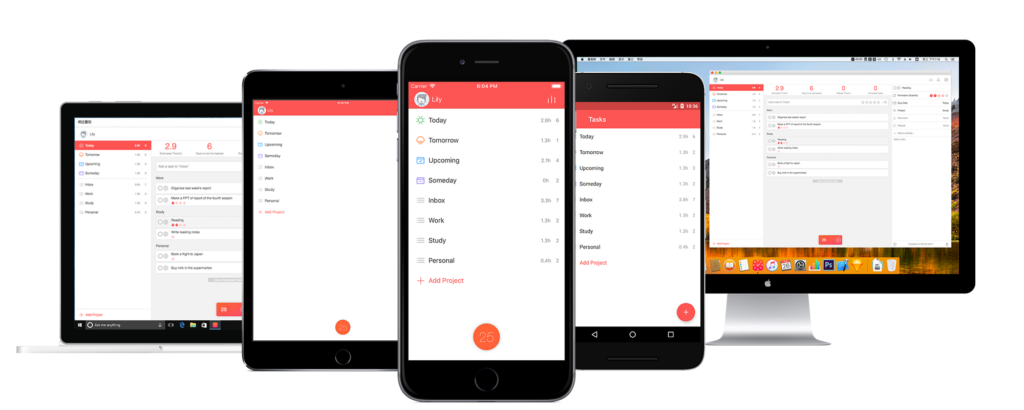
The app called Focus to-do is part of my everyday life and one of the most important tools for my time management.
I could describe what this app can do here, but then I would be condensing a bunch of my other time management tips into this point, which wouldn’t be very good.
2. Pomodoro technique flexibly
I first read about the Pomodoro Technique in a teen-friendly book, and I immediately started using it in my studies. In fact, if you think about it, the 45-minute lessons and the breaks in between are all Pomodoro Techniques. Well, I’ve been using it ever since, but in the world of work, it’s not so easy.
It is almost impossible to use for office work, but it can be very useful for hybrid or remote work on home office days.
For example, if I have two hours between meetings to work on my tasks, I divide those two hours into two 50-minute pomodoros, with a 10-minute break in between. That leaves me with 10 minutes to prepare for the meeting. (Of course, if there’s any more important work I need to do before the meeting, I’ve already done it.)
I don’t always count the same Pomodoro periods and the rest periods in between. The amount of time I count depends on the following things:
- How much work I have
- When are the time-related events during the day, such as meetings, etc.
- How tired or stressed I am. Namely, if I have my 10th Pomodoro period for the day and I am really tired, I focus for a shorter period and rest for a longer period. Of course, this means, in the worst case, that I focus for 30 minutes with a 10-minute rest.
In my experience, this method allows me to allocate my energy much more effectively and to perform much more effectively, not only at work, but in other areas of life as well. One of the most important features of the aforementioned app is the pomodoro countdown timer, although you can only set the time interval in the premium version. In my opinion, the default countdown timer on your phone is also suitable for using flexible pomodoro periods.
3. Plan ahead
Recurring tasks
I was surprised to see how many recurring tasks I have, from housework to work tasks to my workouts. They are easy to manage in Focus to-do, and I guarantee you won’t miss any of them.
Weekly plans
I like to go to bed every Sunday night knowing exactly what the next week has in store for me – as much as I can control what’s going on in the world. So I always prepare the week and always write everything in my calendar – obviously everyone should replace the calendar app, or the paper calendar, or whatever you use.
Daily plans
Every day in Focus to-do you’ll have a nice little list of what tasks you have to do that day. It’s really satisfying for me when I finally check off these events and tasks.
4. Think in projects
I like to think in terms of projects and divide tasks accordingly. There is always a goal that I want to achieve, and the path to get there determines the tasks that belong to the given project. This also has psychological significance for me: if I were to approach running as „I’ll only run a little three times a week”, then I know that I wouldn’t be consistent with this. On the other hand, I set a goal that one day I will run a marathon, in a race, and I will also win a finisher’s medal. Is it very far? Very far. But I need to have such goals mentally, and I have already done it with the Balaton swim (5200m).
A project can be professional or recreational or whatever. It’s simply better to separate parts of my life even if they are intertwined.
And what if it doesn’t work out? Not everything has to work out. I’ll pretend I’ll never run a marathon. That’s okay. All the running training I do for it is definitely good for my health, so I still won.
5. Limit time-wasters

For example, endless scrolling, or when Netflix loads new episodes over and over again and you’re stuck there. There are times when you can’t put down a video game. Well, you have to limit it to a level where it really serves your relaxation and relaxation instead of taking up your time.
I don’t scroll anymore. I have a few groups that I manage and I do my tasks related to them every day, but other than that, I don’t scroll. Never. It takes a lot of self-control and practice.
I don’t really watch movies or TV series, and when I do, I combine it with some language learning. This gives me a lot of extra time that I can spend on something useful.
Video games are a tougher task for me. You could say that I need the most discipline for this. If I just played as long as I wanted, it would have very serious negative consequences for my life. I wouldn’t socialize, I wouldn’t exercise, and I wouldn’t have time for a lot of things that I have now because of my very good time management.
My method dates back to my childhood. When our parents saw that my younger brother and I were playing video games a lot, they introduced a rule that we would play for 1 hour every school day, and 2 hours on weekends or during school breaks. They also introduced a rule that if we got a bad grade or behaved badly, they would take away our video game playing privileges for a certain period of time. The method worked.
6. Take advantage of waiting times
You’re sitting on the train, waiting for the bus, waiting in the doctor’s office, or something like that. I think we all have times in our lives when we have to wait. For my part, I try to spend them usefully. I’m always working on one of my self-education projects, and there are more of these: learning a language (Duolingo) or watching one of the Coursera courses. There are a million of them now, and they’re increasingly entertaining. And okay, there are times when you look out the window and see a beautiful sunset and a fantastic landscape, but let’s face it, most of the time we see crowds on public transport.
7. Say no to things that aren't important enough
I used to have a bad habit of doing a lot of volunteer work. There’s nothing wrong with volunteering, and it’s okay to do your part for the community you’re a part of. But I went too far, volunteering as much as I could, and it was taking a toll on my life.
That’s not the case anymore. As with everything, I now keep it to a minimum and only do 1 volunteer work at a time. I had to prioritize and decide that my own life is more important than the community, and I’ve been much more productive and balanced since then.
8. Plan your entertainment too
When I started to deal with time management, I noticed that I could only keep up the pace for a few weeks, and then I would get tired and fall apart again until I rested. So I tried to slow down and plan fewer things in a day, but I wasn’t happy with the results. The breakthrough came when I started to take my leisure activities just as seriously in terms of organization as my mandatory tasks. Quite simply, because rest is also mandatory, and in order to maintain efficiency, we have to take this into account.
Fortunately, I am a fan of active recreation. I always think that I will still be able to watch TV when I am 80, but as long as I am young and active, I will take advantage of the opportunity. I am a member of several communities (Mensa HungarIQa, Vega Astronomical Association, Csíkszerda) that regularly organize leisure programs. I follow these and as soon as something happens, I book the time in my calendar and treat it as important.