
or how I learned English and how I'm learning Italian now
In Hungary, most people learn English from the second grade of primary school, yet it is extremely difficult to acquire significant language skills in public education. This was the case for me, even though I went to a very reputable high school. Since neither I nor my family had the financial means to pay for additional language schools, I had to take my fate and language skills into my own hands.
I tested my methods for myself, and what worked, I continued to use. Not long after, I passed my intermediate English language exam, successfully. Years have passed since then, I have been working in an international work environment for years, and I am sure that even a higher level language exam would not cause any particular problems.
In this article, I will write about the methods I used a decade ago, and I will supplement them with methods I use now, as I prepare for the intermediate level exam in Italian. I hope my tips will help you learn languages successfully on your own.
1, The most important thing is consistency
I decided that I would study English for 1 hour every day. I would set a timer on my phone and study English until it ended. This was easy on some days, especially at the beginning and especially when I was enthusiastic, but I also sat down to study English for 1 hour when:
- I worked overtime that day
- I had been hiking all day that day and was physically exhausted.
- I was sick
- It was some holiday, like Christmas or New Year’s Day.
- I was suffering from some mental problem
- etc.
How did English learning work in such cases? Hardly. There were days when I would stare at a book for an hour and have no idea what it was about. Still, I consider it an effective method in retrospect, because with this level of consistency, I didn’t allow myself to stop studying long-term.
2, Duolingo is very good, but it's not enough on its own

Duolingo is a great help for learning English 10 years ago and Italian now, in several ways:
- It helps you learn the language consistently by providing just the right amount of push notifications: from time to time it tells you it’s time to learn, but the amount is not too much and not annoying.
- It can motivate you in many different ways, and to be honest, it’s quite addictive and fun.
- Different types of tasks develop different things: vocabulary, grammar, pronunciation, or even listening comprehension.
I find that the vocabulary built by Duolingo does not completely cover any topic; there will always be basic words in every topic that it has missed.
The other thing is that I’m not happy with the way Duolingo explains grammar rules. Italian grammar is much harder than English, and if we hadn’t learned conjugations in high school with great difficulty, I would have had a hard time progressing in Duolingo without looking up the rules. I suspect the explanation behind this is that grammar rules, irregular verbs, and the like are very difficult to present in the entertaining way Duolingo wants them to be.
However, it is important to note that Duolingo must have a great professional team behind it, and this opinion applies to the state of affairs in 2024. Duolingo Max has also just been released, which uses ChatGPT 4.0 to boost language learning. I haven’t tried it yet, but if I do, I will definitely write about it.
3, Have a magic notebook
I used a single large spiral notebook with many pages to learn the language. Everything was in it, like an album. It not only served as a dictionary, but also contained a variety of other content. I always carried it with me, and if necessary, I could take it out on the train or in the doctor’s waiting room. The following things were in the magic notebook:
- There were plain dictionary pages. One side had the words in English, the other side in Hungarian. But on these pages I collected different expressions and idioms.
- Picture dictionary pages: for me and my visual memory, the picture pages were much more useful. For example, I drew a car in the middle of the page and wrote neatly around it, indicating with arrows „bonnet”, „tank cap”, „trim wheel”, etc. This can be done with many things: body parts, organs, parts of plants and animals, bicycle parts, landscapes, etc.
- Of course, these drawings were in color, but so was the rest of the magic notebook. I usually used colored felt-tip pens, but I didn’t mind using a highlighter or colored pencils either. Using color helps you remember what’s in the notebook.
- Feel free to use multiple bookmarks, insert extra pages, and use any method you can think of.
- Separate pages can be dedicated to each grammar rule, with examples.
4, Extended Duolingo
Duolingo is very good at giving topics, but I already criticized the vocabulary associated with it above. So I usually do the following: for each topic that Duolingo suggests (in my case, as I write these lines, it’s „Wedding”), I think about what other words might belong to this topic and create a little vocabulary for it.
5, Have good time management skills
On the rougher days, I had to decide in advance when I would have time to study for 1 hour. Often this was late at night, but it was a great help that, for example, Duolingo, or listening to audio materials (more on that later), could be done on public transport, even on the go. In such cases, my little timer would count down, and sometimes my entire one-hour study time would pass on the go. It just occurred to me that next time I’ll try listening to my favorite audio while running on the treadmill at the gym.
6, The best audio materials
No, these are not your typical language learning audiobooks, because they are boring. However, there are audiobooks that are books you have already read, but in the language you want to learn. In my case, it was the entire Harry Potter series, which is a particularly difficult read for someone who is just getting to intermediate level. However, I find it much more useful, because I really enjoyed this audiobook and really enjoyed listening to it. You don’t have to understand it all, but believe me, you will be able to tell exactly where the audiobook is, at which part, and what it is about.
The house cleaning version of this is when your favorite series or movie is replayed in the target language in the background while you can do your housework.
But if you just want to sit down in front of the TV and watch it and relax, then another great option opens up for you. On the one hand, it makes sense to turn on the subtitles, but I recommend that both the dubbed and the subtitles are in the target language. Have your magic notebook with you while watching TV. Dedicate a separate page to the given movie or series in the magic notebook, and as soon as you understand something new, write it down. You can even pause the movie until then. In my experience, I remember the words I learn this way immediately, because I can connect them to an experience, a plot.
I use this method regularly, so you can imagine what a multicultural experience it is to watch for example Squid Game in Italian.
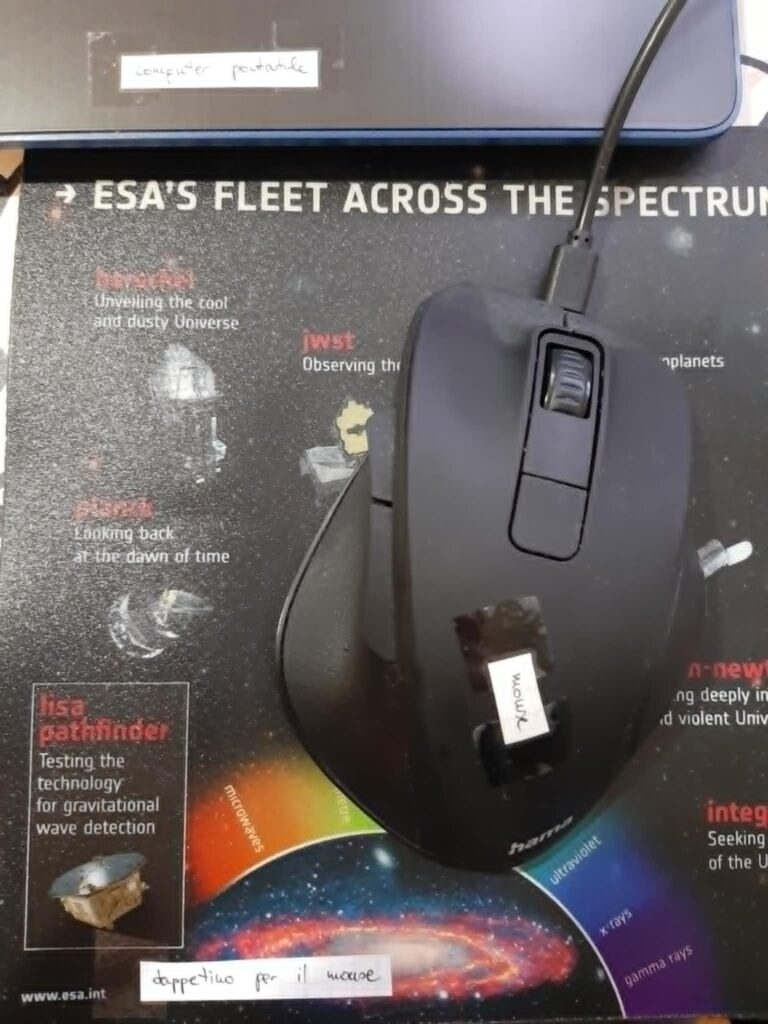
7, Label everything
This is definitely a lot of work, but you have to progress little by little. It is also possible that it will bother certain family members. I simply labeled everything and wrote what it is. It is enough if you put up just a few labels a day, I usually put up about 20 a day. That way, wherever you go at home, you can see the name of everything in the target language, and you can read it over and over again, whether you want to or not.
8, Homemade word cards
To learn the phrases, I made homemade flashcards. They are quite effective, and you can definitely get such packs in English, but they were expensive for me. So I made them for myself. I just searched Google for phrases for the intermediate language exam, and I already made the flashcards, from plain A4 photocopier paper, handwritten. Later, I could also turn them over at the bus stop, or anywhere else I had a few free minutes.
9, Use ChatGPT
ChatGPT can be used in a variety of ways for language learning. So far, I’ve only used it to generate topic-specific glossaries for learning Italian. You can also chat with it and have it read what you’ve written to you.
10, Find a buddy
If you have a friend who speaks your target language and is willing to practice with you, that’s great. It’s best to practice live speaking, as it’s not really possible with all the other methods. It’s important that this friend is supportive and doesn’t mock or laugh at you if you’re clumsy.